Welcome to Real Cajun Cooking - Pure and Simple
RealCajunCooking.com lets you choose from hundreds of authentic Cajun recipes. Learn to easily prepare and cook original Cajun-style family meals with help from south Louisiana's Cajun cook and connoisseur, Jacques Gaspard, who's been preparing great Cajun meals for decades. Create the best gumbos, seafood, jambalaya, stews, salads and deserts -- the way they were originally prepared. Besides great original recipes, you will discover a hodgepodge of stories, recordings, videos and humorous anecdotes to entertain. So enjoy! Don't forget to tell all of your family and friends about Real Cajun Cooking.
Ingredients
- 1 pt. oysters, chopped
- 1 Tbs. butter
- 2 medium onions, chopped or finely sliced
- 3 ribs celery, chopped
- 1 cup bread crumbs
- 1 lemon
- 2 Tbs. Worcestershire sauce
- 2 eggs, beaten
- Cracker crumbs
- Salt, white pepper and Tabasco to taste
Cook onions and celery in one Tbs. butter until tender. Add oyster juice and bread crumbs, oysters, lemon juice and seasonings. Cook a couple minutes over a low fire. Remove from heat and stir in eggs. Pour into small casserole dish and top with cracker crumbs or bread crumbs. Bake 20 to 30 minutes at 350°F.
Make your web videos play on iPhone/iPod/iPad - FREE Download!

Ingredients
 2 Tbs. butter, melted
- 1 Tbs. Worcestershire sauce
- 1/4 tsp liquid smoke
- Pinch of salt
- Pinch of white pepper
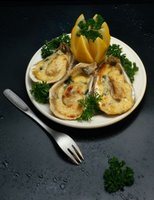
Wash oysters in cold water. Open oysters and remove top shell leaving mussel intact in lower shell. Place oysters in a baking dish and pour a little sauce over each one. Broil for 7 minutes. Oysters cook very fast. Serve in shell.
"I first tried this recipe during my second year in college. My wife was pregnant for our daughter at the time. We were visiting some close friends who had moved out of the college dorms to a quaint small house which was situated next to a railroad track in the north section of Lafayette, Louisiana. Seafood was readily available at a moments notice.
Alvin Toups, a friend, and I shucked a few dozen oysters and decided to smoke them on a small grill. We added a small amount of butter, liquid smoke and freshly minced garlic to each oyster on the half-shell. It turned out great. Later, I tweaked the recipe a bit.
Shantal, my daughter, was not yet born. In 1986 I acquired a small interest in a restaurant in Texarkana, Arkansas. I made up a batch for everyone to try and it consequently became a big hit with our customers. That is how the name Oysters Shantal came into being."
KT
Ingredients
- 3 large onions, chopped
- 1 large bell pepper, finely chopped
- 1/2 cup Rotel tomatoes
- 1/2 cup green onions, chopped
- 1/4 cup parsley, minced
- 1/2 cup butter
- 1 lb. crawfish tails with fat
- Salt and pepper to taste
Sauté onions, pepper, tomatoes, green onions and parsley in butter for 10 minutes.
Add crawfish and crawfish fat, cover tightly and cook for 15 minutes. Add seasoning to taste. (Do not add water. Crawfish contains enough liquid.) Serve over hot long grain rice. Serves 4.
Bon Appetite! Ahheee!!
Ingredients
- 2 lbs. crawfish tails
- 1 can Rotel tomatoes
- 1 can chicken broth
- 1/4 cup butter, melted
- 1 cup onions, chopped
- 1/2 cup celery, chopped
- 1/2 cup bell pepper, chopped
- 1 1/2 cups uncooked long grain rice
- Season to taste
Mix all above. Pour in a pot and cover. Let cook until rice is tender. (A rice pot cooker is excellent for this.)
Make your web videos play on iPhone/iPod/iPad - FREE Download!
It was the smell of my grandmother's seafood gumbo which I loved the most about Friday evenings, as if the preparation for that event meant setting the weekly stress of running the family farm aside, and like a litter of hungry puppies, it seemed like no one in my family could wait until dinner. Grandma was constantly swatting us taste-testers on the hands with a ladle or large wooden spoon to keep us away from her stove.
I could feel my senses reaching out to embrace the hypnotic aromas of her gumbos. It was like music to the soul. The sweet and nutty flavors of the hot roux flooded the whole house. Excess whiffs which vented through the open windows invited anyone walking nearby to come in for a sample (except us kids, of course).
No one could out perform granny when it came to teasing the nose. This was especially true the moment she added the sweet onions, celery and bell peppers to the thick sizzling hot gumbo roux. The aroma of the saute was indescribable. In an instant it acted like a hidden magnet that would attract anyone to the source – to the very pot in which the magic elixir was busy brewing.
It was the closest thing to heaven I could imagine.
The community of Indian Bayou, Louisiana (where I grew up) had a predominantly Catholic population. Eating seafood on Wednesdays and Fridays during Lent kept the parishioners in excellent standing with the Catholic church's meat abstinence laws.
There was something sacred about our church doctrine, alright. In my mind, eating seafood was God's way of rewarding us for not eating meat. One could not wish for more. I was in favor of doing it several times a week. Lent was my favorite time of the year because we would double-dip and eat seafood at least twice a week.
One memorable moment for me, at age seven, was when my grandfather announced to the family that we were going into the crawfish farming operation in a BIG way.
No one had heard of such a thing. No one had a crawfish farm in the area, and arguably, in the entire State of Louisiana, as far as that goes, in which to gauge ours after. Like barn yard hens searching for food, we had to start from scratch.
We had always been inundated with those ubiquitous claw-pinching shell fish. They grew everywhere -- even in people's yards.
Hardly any consideration was given to crawfish back then, except maybe to use them as fish bait for trot lines, but my grandpa had a grand vision and saw something more. As it turned out, he was right. Today more than forty thousand tons of crawfish are harvested annually in Louisiana alone.
Every June grandpa would begin the process of gradually releasing the water from the irrigated rice fields in preparation for the July harvest. The ground had to dry out and harden for a few days to allow the large and cumbersome harvesters to operate at maximum productivity without getting bogged down in the mud.
This was also the time my grandfather would reap hundreds of pounds of crawfish. Through the eyes of a seven year old, the bounty looked like thousands of tiny lobsters.
The announcement to establish a crawfish farm came one Friday afternoon. My grandfather returned from the rice fields in his dark green 1953 Chevrolet pick-up truck loaded with two dozen burlap sacks of crawfish.
The contents of each sack weighed around fifty pounds. He and his farm hands had harvested them beneath the run-off from one forty-acre rice patch.
As it turned out, his desire to operate a crawfish farm, in hindsight, could not have come at a more convenient and advantageous, although devastating, time because Hurricane Audrey, a category four storm, wiped out all the crops in the area, as well as crops in several adjacent parishes, before they could be harvested.
If grandpa's crawfish farm plan worked, it would mean that he could defray some of the loses from the rice crop created by the storm. It worked! It worked beyond his wildest dreams.
Grandpa did not have to tap underground water to flood a forty-acre farm three feet deep.
There were significant costs involved in doing this. The flood waters of Hurricane Audrey solved that problem. He merely reinforced the levee system in his field and captured, from nature, the prime ingredient to produce crayfish -- water.
The storm hit land on the Texas/Louisiana coast on June 27, 1957. An estimated 500 to 600 people perished in that storm. We were fortunate enough to be located on the eastern outer-periphery of its path. Even so, most of the sustained damage in the area came from the flood waters and not from a direct frontal assault.
Grandfather managed to turn a difficult situation into an asset. The cost of tapping underground water in those days would consume nearly 20 percent of the profits. As it turned out, the flood was a blessing from heaven which further enhanced my grandpa's prospects of establishing and operating a successful crawfish farm.
The rice crop, flattened and twisted by the storm, was impossible to harvest. As a result, grandpa left it in the field and held the flood waters over it for several months.
Everything was now under water. He was unaware at the time, however, that the rice and the rice stalks not only gave the newly hatched crawfish sanctuary from fish, frogs, snakes and other predators, it also nourished them. The millions of grains of rice underwater in the lake became their food.
In the years following the first harvest, we learned that dotting the forty-acre ponds with broken bales of rice straw would produce the same effect of protecting and providing food for future crawfish seedlings.
The levee system in the ponds meandered and crisscrossed each other throughout. Almost four miles of levees and walking area became available for customers to catch crawfish.
When I turned eight years old, grandpa began teaching me all about the correct ways to cultivate the little creatures. The growing season synchronized perfectly with the growing of the rice crops. Neither growing season interfered with the other; in fact, they complimented each other.
Crawfish reproduce in the spring and grow through the summer and fall toward maturity.
Some are ready to harvest by November. This gave us at least four months out of each year to produce and harvest the crawfish before slowly releasing the waters once more in preparation for the following year's rice crop.
We allowed the public to enter the ponds to fish. It was fun and economical for them, as well as time-saving and profitable for us.
We rented nets and bamboo poles to the customers, as well as small plastic boats in which to hold their catch. We also sold bait, soft drinks and sandwiches.
The use of personal equipment was not allowed. Food and beverages also were not allowed. Applying these rules prevented folks from polluting the ponds.
I earned a lot of cash (for a kid) during my growing up years on grandpa's crawfish farm. I fished early in the mornings before school and in the late afternoons after school. I fished when it was raining and sometimes when the wind blew fiercely. I even fished once through ice. I also fished on some days that were so splendid -- so perfect -- that the sun would pipe down just the right amount of heat which made it exceptionally comfortable on a nearly cold day.
At age fifteen, I purchased my first new car with the money I earned and saved from catching crawfish.
I remember the year we stopped public fishing for insurance reasons. We harvested all of the crawfish on the farm in-house. We used wire traps, made from 3/4" chickens mesh, and cut fish for bait. Subsequently, we were able to quadruple the yields and profits.
It was truly a family business. Anyone in the immediate family who needed a little extra spending money was able to enter the pond and catch as much as he or she wanted (fishing on half) to sell.
The price back in those days was twenty cents per pound. Imagine that!
There are moments when I would like to go back in time to re-experience the feelings of happiness and joy while fishing with my grandfather on the very first commercial crawfish farm in America.
In loving memory of the family patriarch: Henri Gaspard 1899 -1975.
Copyright © 2008
Our Most Popular Recipes
-
Garfish Recipes - 2 Ways to Cook Gar Fish Fried Gar Balls Smoked Alligator Gar Roast The garfish is a prehistoric fish. Its natural...
-
This Baked Shrimp with Lemon-Garlic Butter recipe is so simple to prepare and VERY delicious, too... especially when using Wild White Gulf...
-
Audio Ingredients 1 cup cooking oil 1 cup all-purpose flour Mix well. In heavy metal pot or skillet stir over medium heat. It is impo...
-
This savory Cajun Chicken Stew Recipe is easy to prepare, but the one common mistake folks make is trying to prepare a chicken stew with y...
-
Boudain is also spelled "boudin". The first part of the video series begins at the bottom of the play list: Part 1 of How to Mak...
-
One of the best reasons to make your own specialty sausages at home is because YOU know what is going into the mix. The large name brand sau...


